
About Nate
A facilitator shaped by lived experience.
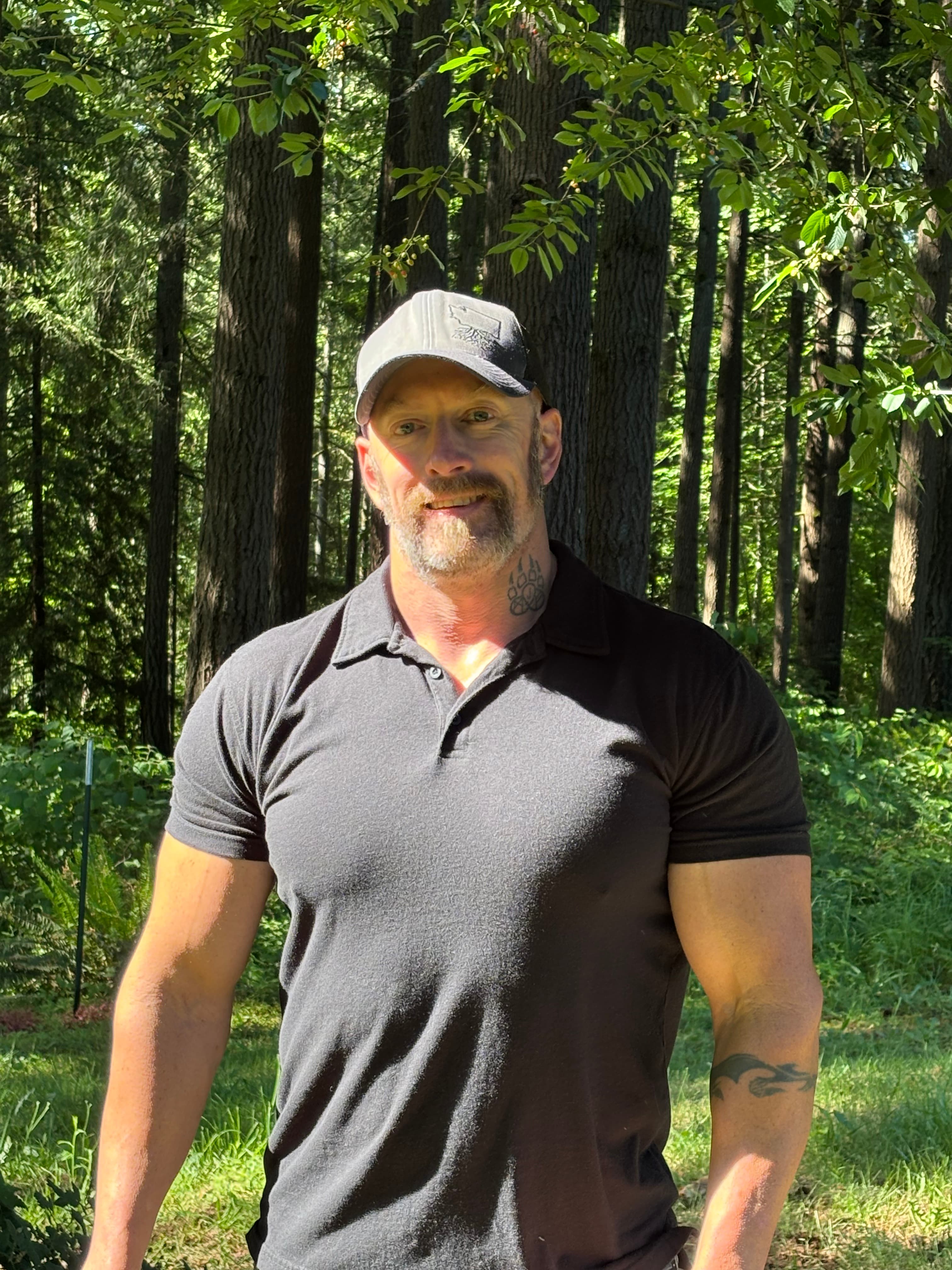
Nate Forest is a licensed psilocybin facilitator under Oregon Measure 109 and a TBI survivor. His path to this work is grounded in resilience, introspection, and the long process of finding his way through difficult seasons.
His Story
Fifteen years of managing. Then something changed.
In July 2008, Nate was in a car accident that should have killed him. He and his brother were both in the vehicle. He spent the next week in the ICU in a medically induced coma, and when he came out, he had a traumatic brain injury and a long, uncertain road ahead.
The TBI didn't announce itself in obvious ways. It expressed itself in the small, grinding dailiness of a life that felt just slightly off. Brain fog so thick some mornings he couldn't finish a sentence. Memory that dropped things without warning. Emotional responses that didn't match — anger that came too fast, sadness too slow, numbness that settled in and stayed. At his lowest point, he lost the ability to read. For someone who loved books, that loss was specific and heavy.
He wasn't incapacitated. He kept going — raised his two sons, stayed in his marriage, held things together. That's part of what made it so exhausting. From the outside, nothing looked especially broken. But he knew the distance between who he'd been and who he was moving through those years, and the gap didn't close. He tried counseling. Neurofeedback. Supplements. Meditation. Exercise. Each required effort and self-honesty. Some helped at the margins. None of them gave him a simple answer.
Before this work became professional, it was personal. Nate had to learn what it meant to live through a changed body, a changed mind, and a changed sense of identity. That kind of loss is not always visible, but it can ask a person to rebuild their relationship with themselves from the ground up.
Athletics became one of the places he practiced that rebuilding. Training, pushing limits, and returning to effort taught him something he still carries into this work: resilience is not a slogan. It is often quiet, repetitive, uncomfortable, and deeply human.
Fifteen years is a long time to manage. It's long enough to start believing that management is the best available option — that this is just what life is now, and you build around it.
Eventually, he tried psilocybin.
He doesn't have a dramatic story about it. What he has is this: an experience that created room for reflection, meaning, and reconnection. Not all at once, not in a single session, and not in a way he would describe as a cure. But there was enough clarity to give him something real to keep working with.
The decision to become a licensed facilitator came from a straightforward place: he had found a process that mattered to him after a very long time of searching, and he wanted to help other people approach it safely, legally, and with care. Particularly people who have lived through loss, transition, injury, grief, or years of carrying more than they let on.
Why This Work
The people I'm most drawn to work with are the ones who don't fit neatly into existing systems — people navigating grief, identity shifts, difficult transitions, or a long season of feeling disconnected from themselves.
Some people arrive after a loss. Some arrive after an injury, a relationship ending, a career change, a spiritual question, or the slow realization that the way they have been getting through life is no longer enough. Nate recognizes that kind of threshold because he has lived through one himself.
That's not a marketing niche. It's a community I recognize. These are people who aren't dramatic about their pain, who usually understate how hard things have been, and who've already put in serious effort. They deserve a process that is honest about its limits and serious about preparation, safety, and integration.
I do this work because I've been on the other side of it. Not as a metaphor — literally. I know what it feels like to sit across from a facilitator with a lot of history and a lot of skepticism. I know what it means to have someone hold that space with care. That's what I'm trying to offer.
One honest thing: I can't promise outcomes. I can tell you that many people find psilocybin facilitation genuinely useful, and that I take this work seriously. But the experience is yours — I'm present for it, not in charge of it. If you're looking for a guarantee, this probably isn't the right fit. I'd rather tell you that now.
How I Work
Presence over prescription.
Preparation is taken seriously
Before any session, we talk in depth — your history, your intentions, your concerns, and whether this is the right time. The quality of the preparation shapes what happens in the room. I don't rush this part, and I won't move forward if something in the intake gives me pause.
Non-directive facilitation
My job during your session is to hold steady presence and make sure you're safe — not to steer where you go or interpret what surfaces. The experience belongs to you. I'm not there to guide you toward a particular outcome.
You're not alone in the room
I stay with you for the entire session. If something difficult comes up — and sometimes it does — I'm there. That's not a small thing, and it's not optional. Consistent presence is part of what makes this work safe.
Integration is part of the work
What happens after a session matters as much as what happens during it. A follow-up integration conversation is included, and I'm available if things come up in the days that follow. The session may bring material into view — integration is how you work with what surfaced.
Resilience includes softness
Nate values discipline, effort, and the athletic mindset of meeting hard things directly. He also knows that pushing limits is not the same as overriding yourself. Good preparation includes learning when to lean in, when to slow down, and when the timing is not right.
Licensing & Oversight
What it means to work within the regulated system.
Nate is a licensed psilocybin facilitator under Oregon Measure 109 — the first legal, regulated psilocybin services program in the United States.
Becoming licensed required completing an accredited training program, passing a background check, and meeting the state's licensing requirements. Facilitators are regulated by the Oregon Health Authority, and that license must be maintained.
Every session takes place at a licensed service center in Oregon. The psilocybin is sourced from a licensed manufacturer, lab-tested for purity and potency, and handled entirely within the regulated supply chain — Nate does not source or handle it directly.
What this means for you
- Oregon Measure 109 Licensed Facilitator
- Regulated by the Oregon Health Authority
- Sessions held at a licensed service center
- Lab-tested psilocybin from a licensed manufacturer
Reading someone's story is different from talking to them.
If you have questions, or if something here resonated and you want to see whether it's the right fit — that's what the discovery call is for. Fifteen minutes. Free. No forms, no commitment on either side.
Book a Free Discovery CallFree. 15 minutes. No pressure.
Not ready to call? Send a message instead →